
When Do Termites Swarm in Pennsylvania?
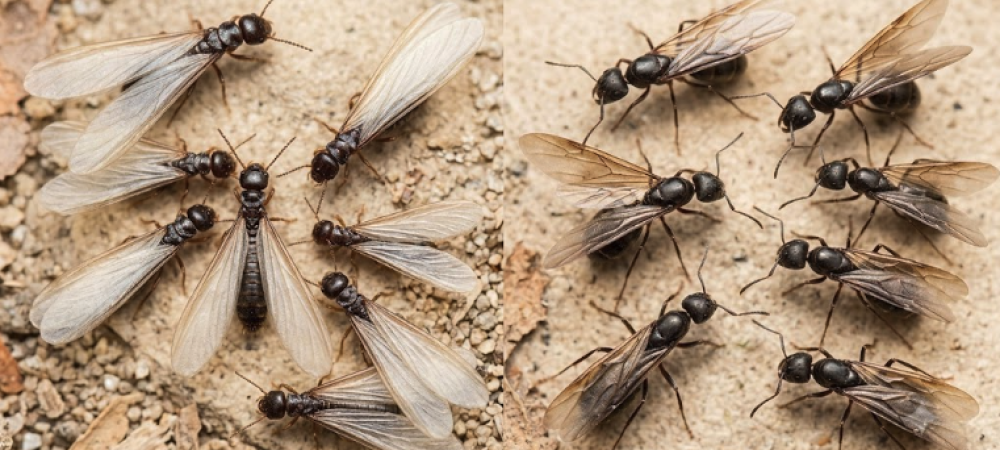
In Pennsylvania, termite swarms typically occur between February and June, with activity peaking in March, April, and May. Eastern subterranean termites, the species responsible for most termite damage across the state, send out swarmers on warm days, often right after a rain, as mature colonies produce reproductive termites that leave to start new colonies nearby.
What Triggers a Termite Swarm?
Swarming happens when a colony reaches maturity, usually after three to five years of growth underground, and produces winged reproductive termites called swarmers. Warm temperatures combined with recent rainfall are the main trigger, since the added moisture and softened soil make it easier for swarmers to emerge and take flight. This is why swarms tend to cluster around the same warm, humid days each spring rather than spreading evenly across the season.
Termite Swarm Timing in Pennsylvania: A Rough Timeline
- Late winter (February): Early swarms can begin on unusually warm days, though this is less common.
- Spring (March through May): This is the peak window for swarming across most of the state, particularly after rain.
- Early summer (June): Swarming activity typically tapers off as temperatures rise and soil dries out.
What a Termite Swarm Actually Looks Like
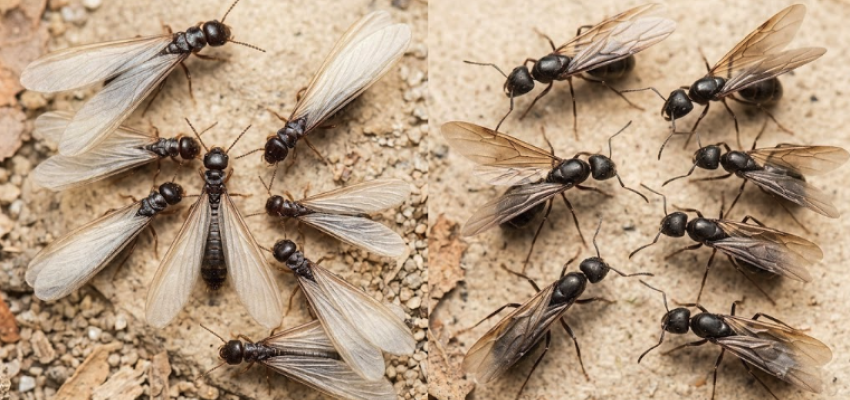
Swarmers are dark brown to black, about 3/8 of an inch long, with two pairs of equal-length wings. They're weak fliers and are usually found near windows, doors, and light fixtures rather than flying long distances. Because they shed their wings shortly after swarming, discarded wings on windowsills, in spider webs, or along baseboards are often the first sign homeowners notice, sometimes before they ever see a live termite.
Termite Swarmers or Flying Ants? A Quick Way to Check
Termite swarmers and winged ants are commonly confused since both appear around the same time of year. Look at three things: the waist (termites have a thick, straight waist, while ants have a pinched one), the wings (termite wings are equal in length, while ant wings are noticeably uneven), and the antennae (termite antennae are straight, while ant antennae are bent). If you're not sure which one you're looking at, it's worth having it checked by a professional rather to have the situation properly treated.
What to Do If You Spot a Swarm
A swarm inside or right next to your home usually means a mature colony is already established nearby, since it takes several years for a colony to grow large enough to produce swarmers in the first place. Spotting a swarm doesn't mean damage has already happened, but it does mean the risk is real and worth addressing before the colony has more time to grow.
Avoid vacuuming up swarmers or spraying them with general insecticide, since this won't address the colony itself. Instead, note where you saw them (a specific window, a basement corner, near a foundation wall) and schedule an inspection. That location often points directly to where the colony is active.
Seen Termite Swarmers Around Your Home?
Sudden Death Termite & Pest Control can inspect your property and help determine whether a colony is active nearby. Request a free quote or learn more about our termite control services.